Auto Start Options in Gnome

I use Linux for all my disc burning needs and have been annoyed that every time I pop in a disc something auto starts. It’s become especially annoying with a DVD-RW that I erase weekly to put on a new TV show episode for viewing on a DVD player.

Searching around all I had found was that the settings are supposed to be in the Gnome Control Center’s Removable Drives and Media applet. Well they aren’t there in modern Gnome and I finally found the answer when searching specifically for stopping Totem auto start. The settings are in the Nautilus file manager under Edit -> Preferences -> Media. It seems the Gnome developers took all the removable media settings out of the applet and put them into Nautilus but left the applet name the same, confusing. The current Gnome Removable Drives and Media applet only sets preferences for Cameras, PDAs, Printers & Scanners and Input Devices. I think they should rename the applet since none of those devices are drives or media, some of them may appear as drives but I don’t think most people consider them to be drives or media.

This is one of those posts that is as much for my future benefit as anyone else’s. The next time I wipe out and re-install Linux on the box I know I’ll have forgotten where the setting is and the Gnome applet name will mislead me.

Heinrich Hertz Birthday

On February 22 in 1857 Heinrich Rudolf Hertz was born in Hamburg, Germany. His work in electromagnetism was important in advancing the state of physics at the end of the 19th century. In particular his modifying of Maxwell’s equations was instrumental in advancing the study of radio waves. Hertz’s experiments proved predictions made by Faraday and Maxwell and showed that radio waves move at the speed of light.

In recognition of Hertz’s great contributions, the SI unit for frequency was named hertz in 1960. The hertz replaced cycles per second (cps) and is now so common that most people are familliar with it as a unit of measurement.
The Wikipedia biography I found to be exceptionally well done with good links to further reading. The one addition I have is a link to an English translation of his book Electric Waves: Being Researches on the Propagation of Electric Action with Finite Velocity. This translation contains a preface written by Lord Kelvin.

Repost of last years birthday post

Happy Birthday Count Volta

Alessandro VoltaToday is the birthday of Count Alessandro Giuseppe Antonio Anastasio Volta. He was born February 18, 1745 in Como, Lombardy, Italy to Filippo Volta and Maria Maddalena Inzaghi. Volta became the first professor of physics at the University of Pavia in 1779 and held that position for much of his adult life. In March 1800 Volta announced his invention of the voltaic pile, the first electric battery. In recognition of Volta’s scientific contributions, the SI unit for electric potential difference (aka, electromotive force) was named the volt in 1881.

Biographies:

Wikipedia SI unit – volt

Re-posted from last years birthday celebration

James Thomson's Birthday

James Thomson was born February 16, 1822 in Belfast Ireland, he was the first son of James and Margaret Thomson. His mother, Margaret Gardner Thomson died in 1830 so his father James raised their seven children alone. In 1832 his father took up the Chair of Mathematics at Glasgow University and two years later at the age of twelve James and his younger brother William began studying at the university. James graduated in 1839 and began his apprenticeship as a civil engineer but do to health reasons decided he was not cut out for the hard physical labor common to civil engineers of the day. So beginning around 1843 he devoted himself to inventing machines and theoretical studies making many contributions to physics and engineering. He was living in Belfast when in 1857 he became Professor of Civil Engineering at Queen’s College. He stayed in Belfast until 1873 when he accepted the Glasgow University Regius Chair in Civil Engineering. He remained at the University of Glasgow until 1889 and died May 8, 1892.

While James Thomson had many achievements including helping his brother William (Lord Kelvin) he caught my eye because of the radian. The term radian was used in print for the first time by James on June 5, 1873 in examination questions he wrote at Queen’s College. He also helped spread the adoption of this unit of measurement in consultations with other scientists and engineers. (See A History of Mathematics By Florian Cajori, page 484) He is also credited with the invention of the non-SI unit the poundal.

The radian is the SI derived unit of measurement for a plane angle. Most people are more familiar with degrees for measuring angles however, the radian is extremely important because it encapsulates the value of PI. PI, the ratio of a circle’s circumference to its diameter is an irrational real number that can create a mess in formulas when degrees are used for the angle measurement.

So, lets raise a glass and toast James Thomson, MA, DSc, LLD, FRS for being a giant on who’s shoulders we can all stand!

References and further reading:
Biographies
Wikipedia
Dictionary of Ulster Biography
Who, Where and When: The History & Constitution of the University of Glasgow [pdf]
His father
1911 Encyclopedia Britannica

The radian
Wikipedia
Angle measurement
Radian Measure
A History of Mathematics By Florian Cajori
Origin of Radians

Latest News on the Teacher Fired for Wizardry

Via a Google Alert I have seen some news about the Jim Piculas story. Mr. Piculas’ attorney has prepared the complaint for the court. This article from the St. Petersburg Times indicates to me that the School Boards’ attorney hasn’t looked carefully at the the potentially very damaging documents that I wrote about previously.

School Board attorney Dennis Alfonso said he had not seen the lawsuit. He acknowledged that the district made no effort to deal with Piculas after receiving his legally required notice to sue back in July.

“We stand by the internal investigation that there was nothing inappropriate in his termination,” Alfonso said.

I still cannot think of any rational explanation for the big discrepancies in those documents. Hopefully, Mr. Piculas won’t take an out of court settlement and let this issue be buried without any explanation. All the local news reports I’ve seen on the web are still not saying anything about the suspicious docs.

Ampère's Birthday

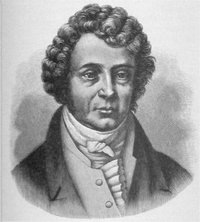
andremarieampereAndré-Marie Ampère was born in Lyon, France on January 20th, 1775. He was a physicist, mathematician, chemist and natural philosopher who made significant contributions in all these fields. Ampere’s work in understanding electromagnetism are recognized by naming the SI unit of electric current the ampere.

Biographies:
Wikipedia
University of St Andrews
Catholic Encyclopedia
National Imports LLC
@ Google Books:
A Short History of Natural Science …
Derivation of Practical Electrical …

Ampere Portraits:
University of St Andrews
Wikimedia Commons

Martin Luther King Day

Today we honor one of the greatest men of the 20th century, the Reverend Dr. Martin Luther King Jr. I feel the best way to celebrate this day is to read some of his writings and listen to some of his speeches. Visit The Martin Luther King, Jr., Research and Education Institute to read some papers or see my previous post with selected quotes from the King papers, MLK Jr., Science, Darwin & Intelligent Design. GrrlScientist has posted two excellent MLK videos in honor of this holiday.

Living the Scientific Life (Scientist, Interrupted): The Reason for this Holiday

Living the Scientific Life (Scientist, Interrupted): I Have A Dream